You're paying for compute you can't use.

Modern workloads changed shape faster than the systems built to execute them. Todd co-founded TAHO Labs to close that gap: break the work into smaller units, route each one to the resource that fits, and pack hardware that currently runs near empty.

The constraint has moved from capacity to execution.

Compute fit

Capacity is no longer the whole answer.

The harder problem is getting the right work to the right resource at the right moment, across systems that were not designed for today's workload shape.

Execution efficiency

More hardware does not automatically mean more throughput.

Modern environments mix CPUs, GPUs, accelerators, cloud, on-prem, and edge capacity. The value comes from making that capacity usable.

Infrastructure layer

The critical layer sits beneath orchestration and above hardware.

TAHO is not a replacement for Kubernetes, SLURM, Ray, vLLM, or existing infrastructure. It focuses on how executable work reaches the resource best able to run it.

The old answer was more compute. The new answer is compute fit.

For decades, scale solved the most important computing problems. That answer still matters. It is no longer complete.

  • Workloads are larger, more dynamic, and more distributed than the systems originally built to run them.
  • Infrastructure teams compensate with more orchestration, placement logic, management layers, and manual coordination.
  • Utilization, cost, latency, and operational complexity increasingly become different symptoms of the same mismatch.
  • AI infrastructure makes the mismatch harder to ignore because high-value work now spans many resource types and execution environments.

TAHO changes the unit of execution.

TAHO is infrastructure software that decomposes workloads into smaller units and routes each one to the resource best able to run it.

Traditional execution versus the TAHO modelIn the traditional model a whole workload is placed on a single machine and most of the machine sits idle. In the TAHO model the same workload is decomposed into units, each routed to the resource best able to run it — CPU, GPU, accelerator, or edge — and executed densely, each resource filling to a slightly different level with a little headroom left.TRADITIONALWorkloadidle capacityOne machinePlace the whole workload on a machine. Most of it sits idle.TAHOWorkloadCPUGPUAcceleratorEdgeDecompose into units. Route each to the resource that fits. Execute densely.
Visit TAHO Labs

Where TAHO fits

An insert, not a replacement. TAHO slots between the tools you already run and the hardware you already own — your orchestration and your hardware stay exactly as they are.

Above TAHO

Your orchestration

Kubernetes · SLURM · Ray · vLLM — unchanged

TAHO

Decompose · route · execute

Routes each unit of work to the resource that fits

Below TAHO

Your hardware

NVIDIA · AMD · Intel · TPU · Trainium — no lock-in

What it actually is

The Magnetic PeerMesh is a decentralized execution fabric. No central scheduler decides where work goes. Peers exchange state and claim work themselves.

Nano-services

The unit of work.

Small enough to fill the gaps that whole-workload placement leaves empty.

.ONCE Execution

Each unit runs one time.

No duplicate work, no lost work.

TAHO Gossip Protocol

Peers exchange capacity state directly.

Routing survives node loss without a central control plane.
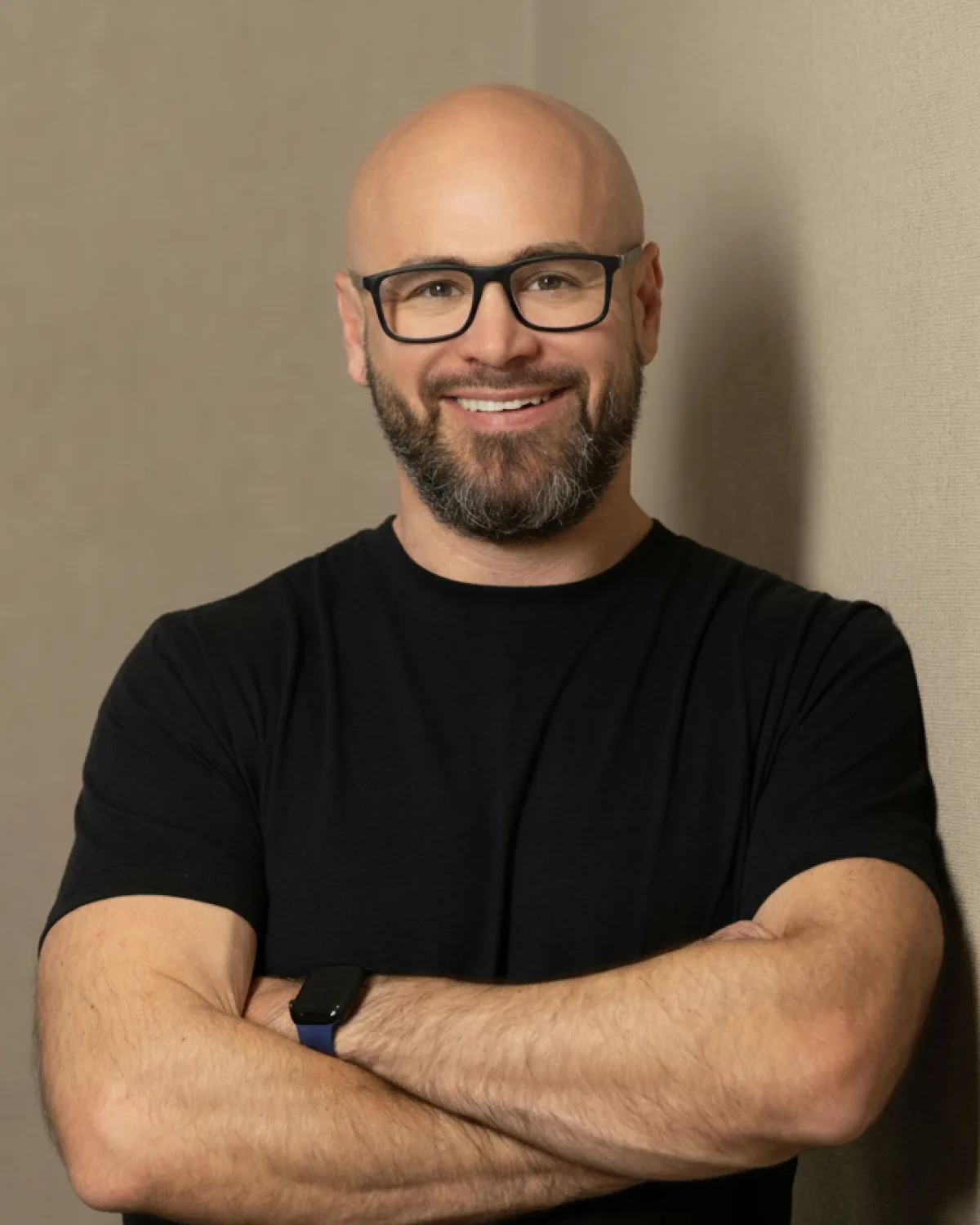
Todd Smith, co-founder and CEO of TAHO Labs.

Background

Todd Smith is Co-Founder and CEO of TAHO Labs. He has worked across global infrastructure, company scaling, acquisition integration, and revenue operations. A recurring pattern in that work: as systems grow, the constraint shifts from adding capacity to using the capacity already in place. That's what TAHO Labs is built to address.

Facebook

Worked during periods of extreme scale, global operational complexity, and acquisition integration including Instagram and WhatsApp.

Snap

Operated through rapid growth, infrastructure expansion, and acquisition integration including Bitstrips.

Docker

VP of Operations as ARR grew from roughly $60M to $175M in about 15 months, while scaling operational systems and revenue operations.

TAHO Labs

Co-founded TAHO Labs and took the Magnetic PeerMesh from architecture to signed enterprise POCs and a filed patent portfolio.

Capacity is table stakes. Fit is the edge.

  • Capacity remains necessary, but the advantage shifts toward systems that make capacity usable.
  • As workloads span CPUs, GPUs, accelerators, cloud, on-prem, and edge, the layer beneath orchestration becomes more consequential.
  • Buyers will evaluate execution efficiency, not only infrastructure spend.
  • The teams that fit work to machines more effectively will get more output from the hardware they already have.

The field is converging on this.

Read the analysis →

Recent pieces on TAHO Labs.

For buyers, technical partners, and investors.

The best conversations are with people seeing the mismatch directly: underused hardware, rising coordination cost, heterogeneous infrastructure, and workloads that no longer fit the execution model.